





How DIN Standard Bushings Meet International Requirements
Time:2026-09-16 18:00:54 Author:zhongbei Click:164
Global transformer procurement increasingly demands components that meet recognized international standards while providing the quality assurance and supply chain flexibility that standardized specifications enable. DIN standard bushings occupy a specific position in this landscape—originating from German national standards but designed to achieve compliance with international IEC requirements and IEEE standards used worldwide. For B2B procurement engineers specifying transformer components for international projects or domestic installations that must interoperate with globally-sourced equipment, understanding how DIN standard bushings satisfy international requirements enables confident specification and eliminates confusion about standards compliance.
The Relationship Between DIN and IEC Bushing Standards
The DIN standards for transformer bushings originated in Germany but were developed with close reference to emerging IEC international standards. This parallel development created strong alignment between DIN and IEC requirements, with DIN often providing more detailed specifications for parameters that IEC addresses in general terms.
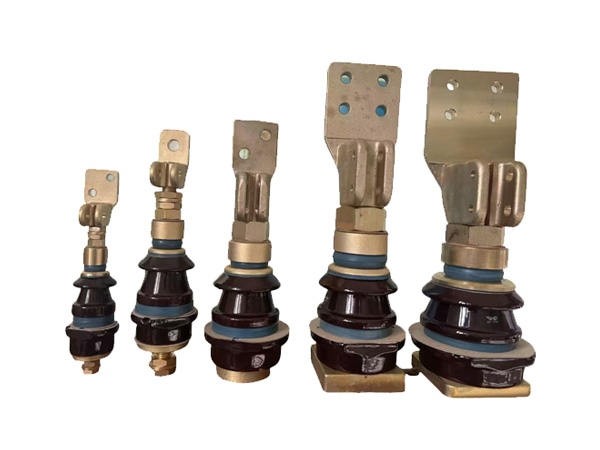
IEC 60137 establishes the international framework for insulated bushings for alternating voltages above 1000 volts. This standard defines terms, classifications, service conditions, electrical and mechanical requirements, test methods, and rating principles that apply to all member nations. DIN standard bushings are designed to comply with IEC 60137, meaning they can be used anywhere that IEC compliance is specified.
The relationship is one of mutual recognition rather than strict hierarchy. IEC 60137 does not supersede DIN standards for German manufacturers—the DIN designation adds specificity and quality assurance to the baseline IEC requirements. A DIN standard bushing meeting DIN 42561 through DIN 42564 requirements automatically satisfies the equivalent IEC 60137 requirements because the DIN standards were developed to be IEC-compliant. This mutual recognition enables DIN standard bushings to serve applications requiring either DIN or IEC compliance without modification.
Key Technical Requirements and How DIN Standards Address Them
Several technical requirements define bushing performance regardless of which standard is cited. Understanding how DIN standard bushings address these requirements clarifies their international applicability.
Voltage ratings establish the maximum system voltage that the bushing can withstand safely. IEC and DIN standards align on standard voltage classes—36 kV, 52 kV, 72.5 kV, 123 kV, and higher—with matching electrical test requirements. A DIN standard bushing rated at 36 kV meets the same voltage withstand requirements as an IEC 60137 bushing rated at the same class, enabling direct substitution in system designs.
Dielectric test requirements include power frequency voltage withstand, lightning impulse withstand, and switching impulse withstand for higher voltage classes. DIN standard bushings are tested to IEC-specified voltage levels, confirming compliance with the same test requirements that IEC 60137 specifies. Test certificates from DIN-standard testing demonstrate IEC compliance without additional verification testing.
Mechanical requirements address cantilever strength—the ability of the bushing to withstand conductor loads, wind loading, and seismic forces without mechanical failure. DIN standards specify mechanical strength classes—typically 3 kN, 5 kN, 8 kN, and 12 kN—that correspond to IEEE C57.19.01 mechanical requirements. This mechanical equivalence ensures that DIN standard bushings can be installed in transformer tanks designed to accept IEEE-class bushings without mechanical interface problems.
Creepage Distance and Environmental Performance
Creepage distance—the path length along the bushing surface between live and grounded parts—is critical for outdoor and polluted environment applications. International standards address creepage through IEC 60815, which establishes pollution severity levels and minimum specific creepage distance requirements.
DIN standard bushings are available in standard, enhanced, and high creepage variants that correspond to IEC 60815 pollution severity levels. Standard creepage provides 25 mm/kV, suitable for clean indoor environments. Enhanced creepage at 31 mm/kV addresses moderately polluted environments—urban industrial areas, agricultural regions. High creepage variants at 35 mm/kV serve heavily polluted environments—coastal areas with salt spray, industrial zones with conductive deposits.
The availability of creepage variants across the full range of pollution severity levels enables DIN standard bushings to serve international applications regardless of local environmental conditions. Specify the creepage class appropriate for the installation environment using IEC 60815 pollution severity assessment, and the DIN standard bushing in the corresponding class provides compliant creepage distance.
Type Testing and Routine Testing Requirements
Quality assurance for DIN standard bushings follows the same type testing and routine testing framework that IEC 60137 establishes, enabling consistent quality verification across manufacturers and supply sources.
Type testing demonstrates compliance with all specified requirements for a bushing design. Tests include voltage withstand at rated and overvoltage conditions, partial discharge measurement, capacitance and tan delta measurement, cantilever strength test, thermal stability test, and pressure withstand test where applicable. DIN standard bushings type tested to DIN standards produce test reports that demonstrate compliance with equivalent IEC requirements, enabling acceptance without redundant testing.
Routine testing applies to every bushing produced, not just samples from a design family. Routine tests for DIN standard bushings include voltage withstand at test voltage, partial discharge measurement, and capacitance and tan delta measurement. These tests confirm that each bushing meets design requirements before shipment. Routine test certificates should accompany each bushing shipment, providing the quality verification documentation that procurement specifications require.
The combination of type testing and routine testing creates a quality assurance framework that international standards recognize as providing adequate verification of bushing performance. DIN standard bushings with complete test documentation satisfy the quality assurance requirements that IEC and IEEE standards establish, without requiring additional qualification testing by the purchaser.
Quality Management and Certification Framework
Beyond the product standards themselves, DIN standard bushings benefit from the broader German quality management infrastructure that provides independent verification of manufacturing quality.
DIN certification processes verify that manufacturers have the quality management systems, testing capabilities, and manufacturing controls needed to produce compliant bushings consistently. While IEC and IEEE standards focus on product requirements, DIN certification addresses the manufacturing organization and its ability to maintain product quality over time. This organizational-level quality assurance complements product-level compliance testing.
KEMA testing in the Netherlands, VDE testing in Germany, and other European testing laboratories provide independent third-party verification of DIN standard bushing compliance with IEC requirements. Test marks from these laboratories provide visible confirmation of compliance that procurement engineers can rely upon without reviewing individual test certificates.
Dimensional Interchangeability and Mounting Compatibility
One of the practical benefits of DIN standard bushings is their dimensional interchangeability, which international standards support through aligned dimension specifications.
DIN standards specify flange dimensions, center hole diameter, mounting bolt circle, and overall height that align with IEC 60137 dimensions for equivalent voltage classes. This dimensional alignment enables DIN standard bushings to be installed in transformer tanks designed to IEC dimensions without modification. The mechanical interface is truly international.
For procurement, dimensional interchangeability means that DIN standard bushings from any qualified manufacturer can replace bushings from any other manufacturer, provided voltage class, creepage class, and mechanical rating match. This interchangeability eliminates single-source dependency, enables competitive procurement, and simplifies spare parts inventory by standardizing on DIN standard bushing specifications rather than manufacturer-specific part numbers.
Frequently Asked Questions
Are DIN standard bushings accepted in North American projects?
DIN standard bushings can be used in North American projects when the project specification accepts IEC or DIN standards rather than exclusively requiring IEEE or ANSI standards. Many international projects and projects with European equipment connections accept DIN standard bushings. For domestic US projects, verify that the specification allows DIN or IEC compliance before specifying DIN standard bushings.
What documentation should I request from DIN standard bushing suppliers?
Request type test certificates demonstrating compliance with applicable DIN and IEC standards, routine test certificates for the specific bushings being supplied, material certifications for the insulation system components, and dimensional verification data confirming that flange and mounting dimensions match specifications. Quality management system certification of the manufacturer provides additional assurance of consistent quality.
How do I select the correct creepage class for a specific installation?
Apply IEC 60815 pollution severity assessment to the installation site. Evaluate the pollution sources present—coastal salt, industrial emissions, desert dust, agricultural activities—and assign a pollution severity level. Select the DIN standard bushing creepage class that provides the specific creepage distance required for that severity level. When in doubt, specify the next higher creepage class for additional margin.
Can I use a DIN standard bushing to replace an IEEE bushings in an existing transformer?
Yes, when voltage class, creepage class, mechanical rating, and dimensions match. The dimensional interchangeability of DIN standard bushings with IEC and IEEE dimensions enables direct substitution in most cases. Verify that the mounting flange dimensions and bolt circle match before ordering. When dimensions match, the DIN standard bushing provides equivalent performance in the replacement application.
What is the difference between DIN and VDE bushing standards?
VDE (Verband der Elektrotechnik) standards are developed by the German electrical industry association and often align closely with DIN standards. Many bushing standards have both DIN and VDE designations that cover the same requirements. For procurement purposes, specifying compliance with either DIN or VDE standard provides equivalent quality assurance. The important factor is specifying standards that the project specification accepts and that the supplier can demonstrate compliance with through test certificates.
Conclusion
DIN standard bushings meet international requirements through a combination of design-for-compliance with IEC 60137, independent third-party testing and certification, and dimensional interchangeability that aligns with IEC and IEEE dimension standards. For B2B procurement engineers, specifying DIN standard bushings provides quality assurance benefits—the precision of German manufacturing standards combined with the universal applicability of IEC compliance. The result is a component specification that serves domestic projects, international projects, and replacement applications regardless of which standards framework governs the specific installation. The supply chain flexibility that standardized specifications provide reduces procurement cost, eliminates single-source dependency, and simplifies spare parts inventory management throughout the transformer service life.
References
IEC 60137:2017, "Insulated Bushings for Alternating Voltages Above 1000 V," International Electrotechnical Commission.
IEEE Std C57.19.01-2017, "Standard Performance Characteristics and Dimensions for Outdoor Apparatus Bushings," IEEE Power & Energy Society.
IEC 60815-1:2018, "Selection and Dimensioning of High-Voltage Insulators – Part 1: Definitions, Information and General Principles," International Electrotechnical Commission.
DIN 42561:2017, "Oil-Impregnated Paper Insulated Bushings for Alternating Voltages Above 1000 V," Deutsches Institut fuer Normung.
Kulkarni, S.V., and Khaparde, S.A., "Transformer Engineering: Design, Technology, and Diagnostics," CRC Press, 2012.
MORE
-
Mechanical vs Magnetic Oil Level Indicators for Transformers
2026-09-16
-
How DIN Standard Bushings Meet International Requirements
2026-09-16
-
Choosing Transformer Copper Terminal Stud Specifications
2026-09-16
-
How to Choose the Right Dry Type Transformer Capacity
2026-08-18
-
How to Source Reliable Transformer Parts Suppliers
2026-08-12