





Copper vs Aluminum Terminal Studs for Transformers
Time:2026-07-11 15:21:27 Author:zhongbei Click:141
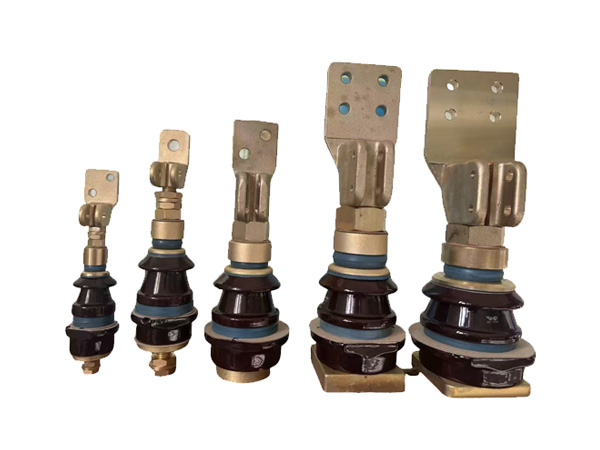
The choice of terminal material for transformer connections is one of the most consequential decisions in transformer design and procurement. The copper terminal stud and its aluminum counterpart represent fundamentally different engineering philosophies: premium performance versus cost optimization, proven longevity versus weight and material savings. For B2B procurement engineers and transformer designers, understanding the technical trade-offs between copper terminal studs and aluminum alternatives enables decisions that balance first cost, lifecycle performance, and maintenance requirements. This article provides an engineering-level comparison grounded in material properties, field experience, and total cost of ownership analysis.
Fundamental Material Properties
The performance gap between copper and aluminum terminal studs begins with the basic material properties that govern electrical and thermal performance.
Electrical conductivity is the most significant differentiator. Copper conductivity is 101% IACS (International Annealed Copper Standard), making it the benchmark against which all other conductive materials are measured. Aluminum conductivity is 61% IACS—meaning aluminum must have approximately 65% larger cross-sectional area than copper to carry the same current. For a 2000 A transformer connection, this translates to a copper terminal stud of approximately 35 mm diameter versus an aluminum equivalent of approximately 55 mm diameter. The larger aluminum dimensions affect busbar sizing, enclosure layout, and overall transformer footprint.
Thermal conductivity follows the same pattern. Copper at 386 W/mK conducts heat far more effectively than aluminum at 237 W/mK. For a terminal stud joint that generates heat from contact resistance, superior thermal conductivity means copper dissipates the heat more efficiently, reducing the temperature rise at the critical contact interface. Lower joint temperature translates directly to lower contact resistance, since contact resistance generally increases with temperature in a positive feedback relationship.
Joint Reliability and Thermal Cycling
The Achilles heel of aluminum electrical connections is their behavior under thermal cycling—the daily and seasonal temperature variations that every transformer experiences throughout its operational life.
Aluminum has a thermal coefficient of expansion of 23 times 10 to the power of negative 6 per degree C, compared to copper 17 times 10 to the power of negative 6 per degree C. This means aluminum expands and contracts more aggressively with temperature changes. When an aluminum terminal stud is bolted to a copper busbar or a steel flange, the differential thermal expansion creates micro-movement at the joint interface with each thermal cycle. Over thousands of cycles, this movement progressively loosens the bolted joint, increases contact resistance, and generates more heat—the classic thermal runaway failure sequence for aluminum connections.
Copper terminal studs experience less differential expansion against steel and copper hardware, reducing the loosening tendency. The superior thermal conductivity of copper also means that joint temperature rises less for equivalent contact resistance, further reducing the thermal cycling stress. Field reliability data consistently shows that copper-to-copper joints achieve significantly lower failure rates than aluminum-to-copper or aluminum-to-aluminum joints over equivalent service periods.
Galvanic Compatibility
When copper and aluminum are connected directly in the presence of an electrolyte, galvanic corrosion accelerates the aluminum side of the joint. The galvanic series places copper nobility well above aluminum—meaning aluminum corrodes preferentially when the two metals are electrically connected in the presence of moisture. In transformer applications where oil vapor, humidity, or condensation can reach the joint, direct copper-aluminum contact without appropriate bi-metallic isolation is a significant reliability liability. Copper terminal studs eliminate this risk entirely when connected to copper busbars—the standard practice for high-reliability transformer installations.
Mechanical Properties and Manufacturing
Beyond electrical performance, mechanical properties influence the suitability of copper terminal studs for different transformer applications.
Copper has superior tensile strength (200–250 MPa for ETP copper) compared to aluminum (70–100 MPa for common aluminum alloys). This translates to better mechanical robustness for the terminal stud under short-circuit electromagnetic forces, which can impose significant mechanical stress on transformer connections. The higher strength of copper reduces the risk of plastic deformation or thread damage during installation and maintenance.
Copper threads are easier to machine and maintain precise tolerances on than aluminum threads, which are more prone to galling and thread damage during repeated assembly and disassembly. For transformer connections that require periodic torque verification, copper terminal studs are more forgiving of maintenance handling than aluminum equivalents.
Aluminum lower density (2.7 g/cm3 vs copper 8.9 g/cm3) provides a weight advantage that is significant for portable or mobile transformer applications. For utility pole-mounted transformers where weight directly affects installation cost and structural requirements, aluminum terminal studs and associated connections may be justified on weight grounds alone.
Corrosion Resistance and Environmental Suitability
Both copper and aluminum form stable oxide layers that provide inherent corrosion resistance, but the character and protective quality of these layers differ significantly.
Copper oxide is conductive and relatively thin. It does not significantly impede electrical contact between properly prepared joint surfaces. Anti-oxidation compounds such as silver-plating or copper-based contact greases further reduce contact resistance and prevent excessive oxide buildup.
Aluminum oxide (Al2O3) is an excellent electrical insulator—it is the same material as sapphire and ruby. While the aluminum oxide layer is thin, it significantly increases contact resistance if it forms between the joint surfaces. This is why aluminum connections require specialized anti-oxidant compounds designed to penetrate and displace the oxide layer. Without proper surface preparation and compound application, aluminum connections develop high-resistance oxide films that heat, oxidize further, and fail.
For harsh environments—coastal installations with salt exposure, industrial sites with acidic or sulfurous atmospheres—copper terminal studs with silver plating provide superior long-term reliability compared to aluminum alternatives. The silver plate preserves a low-resistance contact surface even after years of environmental exposure.
Total Cost of Ownership Comparison
The first cost premium of copper terminal studs over aluminum is real but must be evaluated against lifecycle performance to determine true economic value.
Material cost for copper terminal studs is approximately 2–3 times the material cost of equivalent aluminum studs by weight. However, the weight difference means that for the same current capacity, the copper terminal stud costs only approximately 1.5–2 times the aluminum equivalent—not 3 times. At current copper prices of $8,000–$10,000 per tonne and aluminum at $2,500–$3,000 per tonne, the absolute cost premium for copper terminal studs is often less than $500 per transformer—a small fraction of the transformer total cost and a negligible fraction of the lifecycle cost of a transformer failure caused by connection degradation.
Maintenance cost differences favor copper. The superior thermal cycling stability of copper joints means fewer torque verification visits, lower risk of emergency repair from connection failures, and longer intervals between joint refurbishment. The avoided cost of a single unplanned outage caused by a failed aluminum connection typically exceeds the first-cost premium of copper terminal studs many times over.
Frequently Asked Questions
When are aluminum terminal studs justified on transformers?
Aluminum terminal studs are justified in cost-sensitive applications where weight reduction is valuable and where the thermal cycling duty is moderate. Low-voltage transformers where current ratings require larger cross-sections anyway may benefit from aluminum where the dimensional impact is less pronounced. For high-voltage transformers and critical applications, copper terminal studs are the engineering-conservative choice with better lifecycle economics.
What happens if copper and aluminum busbars must be connected?
Direct copper-aluminum contact without bi-metallic isolation creates galvanic corrosion risk. Use properly designed bi-metallic washers or transition plates specifically rated for the current and environmental conditions. Never use ordinary flat washers between dissimilar metals—creep and relaxation at the interface will compromise the joint over time. Specify bi-metallic components from recognized manufacturers with published current ratings and environmental compatibility data.
How do I verify that copper terminal stud connections are properly made?
The three primary verification methods are torque verification using calibrated tools, thermal imaging during peak load to detect hot spots, and micro-ohmmeter measurement of contact resistance. Torque verification confirms that the mechanical joint is properly assembled. Thermal imaging detects abnormal heating that indicates developing contact resistance problems. Contact resistance measurement provides a quantitative baseline for trend monitoring. All three methods should be incorporated into the transformer commissioning and maintenance program.
Do copper terminal studs require special anti-corrosion treatment?
For standard indoor or enclosed outdoor installations, silver-plated or tin-plated copper terminal studs require minimal surface preparation beyond removing visible oxidation before assembly and applying a thin film of copper anti-seize compound to the threads. For highly corrosive environments, specify silver plating with a chromate conversion coating for maximum corrosion resistance. The plating is applied to the shank and contact surfaces during manufacturing.
What is the expected lifespan comparison between copper and aluminum terminal studs?
Properly installed copper terminal studs in bolted connections routinely achieve 30–40 years of reliable service with routine torque verification every 3–5 years. Aluminum terminal studs in well-maintained joints can achieve similar service life, but the maintenance burden is higher and the risk of premature failure from thermal cycling relaxation is significantly greater. Field experience data consistently shows higher joint failure rates for aluminum connections, particularly in outdoor transformers with significant thermal cycling duty.
Conclusion
The comparison between copper terminal studs and aluminum alternatives resolves clearly in favor of copper for the majority of transformer applications. Copper superior electrical and thermal conductivity, lower thermal expansion coefficient, better galvanic compatibility with common busbar materials, and stronger thread mechanical properties all contribute to lower lifecycle cost through improved joint reliability and reduced maintenance burden. The first-cost premium of copper terminal studs is modest compared to the avoided cost of connection failures and unplanned outages. For B2B procurement teams, specifying copper terminal studs as standard on transformers above 315 kVA and on all outdoor and critical installations is sound engineering practice that protects transformer investment and supports reliable power system operation throughout the transformer intended 30-year service life.
References
IEEE Std C57.12.90-2015, "Standard Test Code for Liquid-Immersed Distribution, Power, and Regulating Transformers," IEEE Power & Energy Society.
Holm, R., "Electric Contacts: Theory and Applications," Springer, 4th edition, 2010.
IEC 60865-1:2011, "Short-Circuit Currents – Calculation of Effects – Part 1: Definitions and Calculation Methods," International Electrotechnical Commission.
Kulkarni, S.V., & Khaparde, S.A., "Transformer Engineering: Design, Technology, and Diagnostics," CRC Press, 2012.
Pansini, A.J., "Power Transformer Fundamentals," Fairmont Press, 2018.
MORE
-
Transformer Components Most Likely to Require Replacement
2026-07-24
-
Signs Your Transformer Oil Level Indicator Needs Replacement
2026-07-11
-
dry-type-transformers-for-commercial-buildings
2026-07-11
-
DIN Standard Porcelain Bushings: Features and Benefits
2026-07-11
-
Copper vs Aluminum Terminal Studs for Transformers
2026-07-11