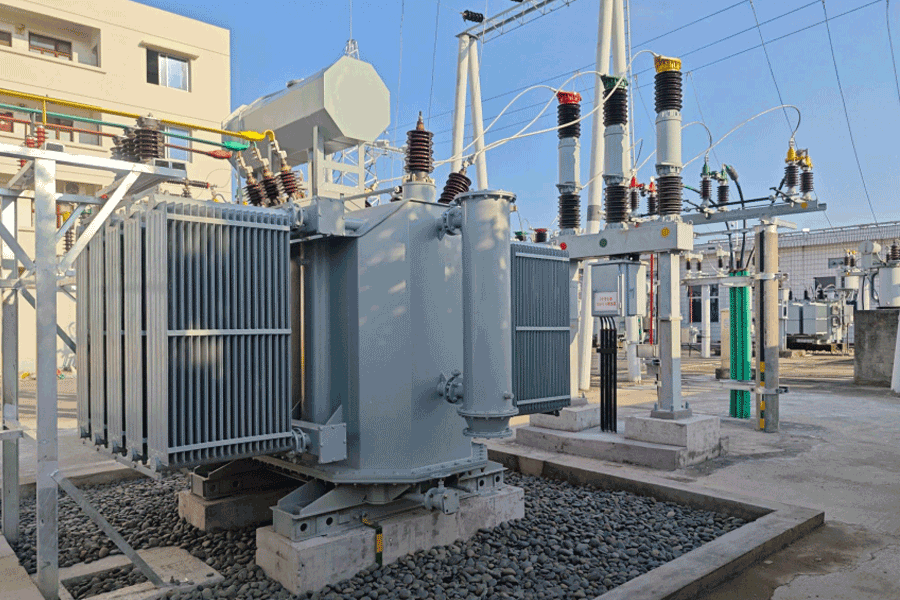






dry-type-transformers-for-commercial-buildings
Time:2026-07-11 15:40:09 Author:zhongbei Click:173
Commercial buildings present a distinct set of requirements for power distribution transformers. With transformers frequently located in basement electrical rooms, rooftop enclosures, or occupied floor mechanical spaces, fire safety, noise management, and maintenance accessibility are as important as electrical performance. The dry type transformer is purpose-built for exactly these environments—delivering reliable voltage transformation without the fire hazards, oil leakage risks, and specialized handling requirements of liquid-filled alternatives. For building engineers, electrical contractors, and B2B procurement teams working on commercial construction or retrofit projects, understanding when and how to specify dry type transformers for commercial buildings is a foundational skill in modern building electrical system design.
Why Dry Type Transformers Suit Commercial Buildings
The architectural and operational constraints of commercial buildings create requirements that oil immersed transformers struggle to satisfy. The dry type transformer resolves these conflicts through its fundamental design characteristics.
Fire safety is the primary driver for dry type transformer selection in commercial buildings. The National Electrical Code (NFPA 70) and International Building Code (IBC) impose strict restrictions on oil-filled equipment in occupied spaces. Oil transformers require dedicated fire-rated vaults or outdoor installation, adding significant construction cost and consuming valuable floor area. The dry type transformer, with its Class F (155 degrees C) or Class H (180 degrees C) insulation system and absence of flammable liquid, can be installed in standard electrical rooms without vault construction in most jurisdictions.
Maintenance accessibility is improved with the dry type transformer. No oil sampling, no oil level monitoring, no gasket inspection—the inspection and maintenance burden is considerably lower than oil-filled equipment. For transformers installed in accessible electrical rooms, this reduces operating cost and enables more frequent visual inspection.
Environmental compliance is simpler with dry type transformers. Oil-filled transformers require oil containment provisions, leak detection systems, and specialized disposal procedures when decommissioned. Dry type transformers generate no liquid waste and present no soil or groundwater contamination risk—a significant advantage in buildings where environmental remediation costs can be substantial.
Sizing Dry Type Transformers for Commercial Buildings
Correct transformer sizing is the most consequential specification decision, directly affecting initial cost, operating efficiency, and long-term adaptability.
Demand calculation determines the minimum dry type transformer rating. Sum the connected load in kVA, apply a diversity factor based on load type (0.7–0.8 for general lighting, 0.9 for power loads, 1.0 for continuous process loads), then apply a utilization factor to account for expected loading. For a typical commercial building, transformer ratings from 225 kVA to 1500 kVA are most common for secondary distribution.
Never specify dry type transformers for continuous operation above 80% of nameplate rating. Transformers loaded above this threshold experience significantly accelerated insulation aging and generate noise levels that exceed commercial building comfort standards. A transformer specified with adequate margin will operate cooler, last longer, and produce less hum than one specified at the limits of its rating.
Plan for growth. Commercial building loads typically increase over time as electrical equipment is added or upgraded. Specifying a dry type transformer with 20–25% spare capacity avoids the need for costly transformer replacement when loads inevitably grow.
Efficiency Standards for Commercial Building Transformers
Transformer efficiency directly affects building operating cost. For a dry type transformer in a commercial building running 8,760 hours per year, each 1% of losses converted to dollars represents real money over a 25-year service life.
The DOE efficiency standards for commercial distribution transformers (10 CFR Part 431) mandate minimum efficiency levels for transformers sold in the United States, aligned with NEMA TP-1. These minimums apply to dry type transformers as well as liquid-filled units. For a typical 300 kVA low-voltage dry type transformer, the minimum efficiency is approximately 97.5% at 35% load—achieving these levels requires high-grade core steel and careful manufacturing process control.
NEMA Premium efficiency dry type transformers exceed the minimum standard by approximately 0.5–1.0 percentage points. The energy savings over a 25-year operating life typically recover the premium specification cost within 3–5 years at typical commercial electricity rates.
Noise Levels in Commercial Building Applications
Transformer noise is a significant concern in commercial buildings where acoustic comfort is expected in office spaces, meeting rooms, and tenant areas adjacent to electrical rooms.
The sound level of a dry type transformer depends on the core flux density, winding construction type, and mounting arrangement. VPI (Vacuum Pressure Impregnated) dry type transformers typically produce 5–8 dB higher noise than equivalent cast resin units at the same kVA rating. Standard 1000 kVA dry type transformers produce approximately 55–68 dB at 1 meter, depending on design.
Sound isolation requirements for dry type transformers in commercial buildings depend on the adjacent space occupancy. A transformer in a dedicated electrical room adjacent to a parking garage needs minimal acoustic treatment. One in a basement electrical room below occupied office floors requires vibration isolation mounts and acoustic barriers that prevent structure-borne and airborne noise transmission.
For buildings where acoustic performance is critical—hospital meeting rooms, recording studios, premium office space—specify low-noise dry type transformers with special core and winding designs that achieve 10–15 dB below standard levels. Budget for resilient mounting and acoustic room treatment as part of the total installation cost.
Installation Requirements for Indoor Commercial Environments
The dry type transformer installation requirements for commercial buildings are fundamentally different from industrial outdoor installations.
Room ventilation must be calculated to remove transformer heat without creating temperature buildup that degrades transformer performance or creates uncomfortable conditions for maintenance personnel. Each kilowatt of transformer loss requires approximately 100 m3/h of ventilation airflow at a 20 degree C temperature rise. A 300 kVA transformer with 4 kW total losses requires 400 m3/h of ventilation capacity—a requirement that significantly affects mechanical room design.
Enclosure specification determines protection level. Indoor dry type transformers in clean environments typically require IP20 or IP30 enclosures. In dusty industrial environments within the building—parking structure ventilation rooms, loading docks—specify IP44 or IP54 to prevent dust accumulation on windings that can compromise insulation performance.
Structural support must account for the dry type transformer weight, which is typically 1.5–2.5 times the weight of an equivalent oil-filled transformer per kVA. Floor loading calculations must confirm that the structural slab or support framing can safely carry the transformer weight plus any vibration isolation system.
Maintenance Practices for Commercial Building Dry Type Transformers
The maintenance burden for dry type transformers in commercial buildings is lower than for oil-filled units but not zero. A structured maintenance program ensures maximum service life.
Annual inspection should include visual condition assessment of the windings and enclosure for dust accumulation, evidence of overheating such as discoloration or tracking marks, and mechanical integrity of connections and mounting. Thermography during peak load identifies hot spots in connections or windings before they progress to failure.
Insulation resistance testing every 3–5 years provides a baseline for insulation condition trending. Compare results against factory test certificates and previous field measurements. A decreasing insulation resistance trend warrants investigation and potential load reduction until the cause is identified and corrected.
Connection maintenance—torque verification of transformer copper terminal studs and busbar connections—should follow the same schedule as for oil transformers, typically every 3–5 years during planned outages. Loose connections in dry type transformers produce the same thermal runaway consequences as in oil units.
Frequently Asked Questions
Can dry type transformers be installed outdoors in commercial buildings?
Yes, with appropriate weatherproof enclosures. Outdoor dry type transformers for commercial buildings typically use enclosures rated IP44 or higher with weather shields, UV-resistant coatings, and provisions for condensate drainage. These units are commonly used for rooftop secondary distribution substations and for pad-mounted applications where oil equipment is prohibited.
What is the maximum transformer rating available in dry type design for commercial buildings?
Standard dry type transformer ratings for commercial building applications extend to approximately 10 MVA at 15 kV class, though practical limitations of transportation and handling typically restrict commercial building installations to 2500 kVA or below per unit. Larger commercial complexes use multiple transformer units with primary switching to achieve higher total capacity with improved redundancy.
What causes humming noise in dry type transformers?
The magnetostriction effect—in which the core material changes shape slightly with each alternation of the AC magnetic field—produces the characteristic transformer hum at twice the supply frequency (100 Hz or 120 Hz). Core flux density, lamination quality, and manufacturing precision all influence hum level. Loose winding clamping, resonating with the magnetic forces, can produce additional tonal noise. Proper mounting vibration isolation prevents structure-borne hum from reaching occupied spaces.
How long do dry type transformers last in commercial buildings?
With proper installation and maintenance, a dry type transformer in a commercial building achieves 25–30 years of reliable service. Insulation Class F units are rated for hot spot temperatures of 130 degrees C; operating consistently below 110 degrees C at rated load extends insulation life significantly. The key longevity factors are avoiding chronic overloading, maintaining clean windings, and ensuring adequate ventilation to prevent thermal stress.
What efficiency level should I specify for a new commercial building transformer?
As a minimum, specify transformers that meet or exceed DOE efficiency standards. For buildings with high electricity costs, long operating hours, or sustainability certification requirements (LEED, BREEAM), specify NEMA Premium efficiency units. The additional cost is recovered through energy savings within the building operating life. Calculate the actual payback period using the building specific electricity rate and expected load factor before making the final specification decision.
Conclusion
The dry type transformer is the natural choice for commercial building electrical distribution—the fire safety, maintenance simplicity, and environmental cleanliness it offers align perfectly with the requirements of occupied building environments. For B2B building engineers and procurement professionals, the key specification decisions—correct sizing with growth margin, efficiency class matching operating cost sensitivity, noise level matching adjacent occupancy requirements, and ventilation adequate for transformer heat removal—determine whether the transformer delivers optimal lifecycle value. Treated as an integral part of the building electrical infrastructure rather than a commodity component, the dry type transformer in a commercial building installation will reliably serve the building electrical needs for 25 years or more with minimal maintenance intervention and no environmental remediation concerns.
References
IEC 60076-11:2018, "Power Transformers – Part 11: Dry-Type Transformers," International Electrotechnical Commission.
IEEE Std C57.12.01-2020, "General Requirements for Dry-Type Distribution and Power Transformers," IEEE Power & Energy Society.
NEMA Std 20-2014, "Installation Guidelines for Dry-Type Transformers on General Branch Circuits," National Electrical Manufacturers Association.
Kulkarni, S.V., & Khaparde, S.A., "Transformer Engineering: Design, Technology, and Diagnostics," CRC Press, 2012.
MORE
-
Transformer Components Most Likely to Require Replacement
2026-07-24
-
Signs Your Transformer Oil Level Indicator Needs Replacement
2026-07-11
-
dry-type-transformers-for-commercial-buildings
2026-07-11
-
DIN Standard Porcelain Bushings: Features and Benefits
2026-07-11
-
Copper vs Aluminum Terminal Studs for Transformers
2026-07-11